
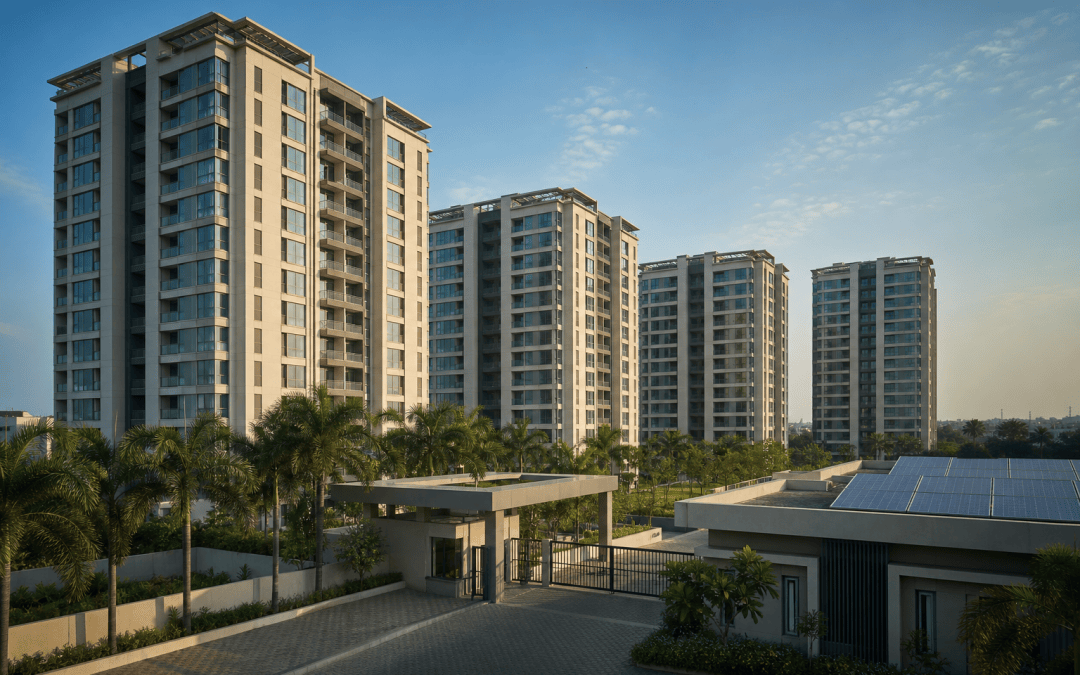
By Syncsine Engineering Team · Reviewed by Syncsine engineering · Updated 2026-08-26
If you live in a Tamil Nadu apartment, start here. The electricity board *did* raise tariffs. The society’s common EB bill went up. That common bill is built into your maintenance. So you are paying the hike even if your own flat meter looks normal.
Power quality in Chennai housing societies is only a short name for that extra cost — plus lifts and motors that keep failing. Some of the rise is the government. You cannot vote it away. Some of it is still sitting in the building. You do not need to become an electrician. You need five sharp questions and a forward to the secretary.
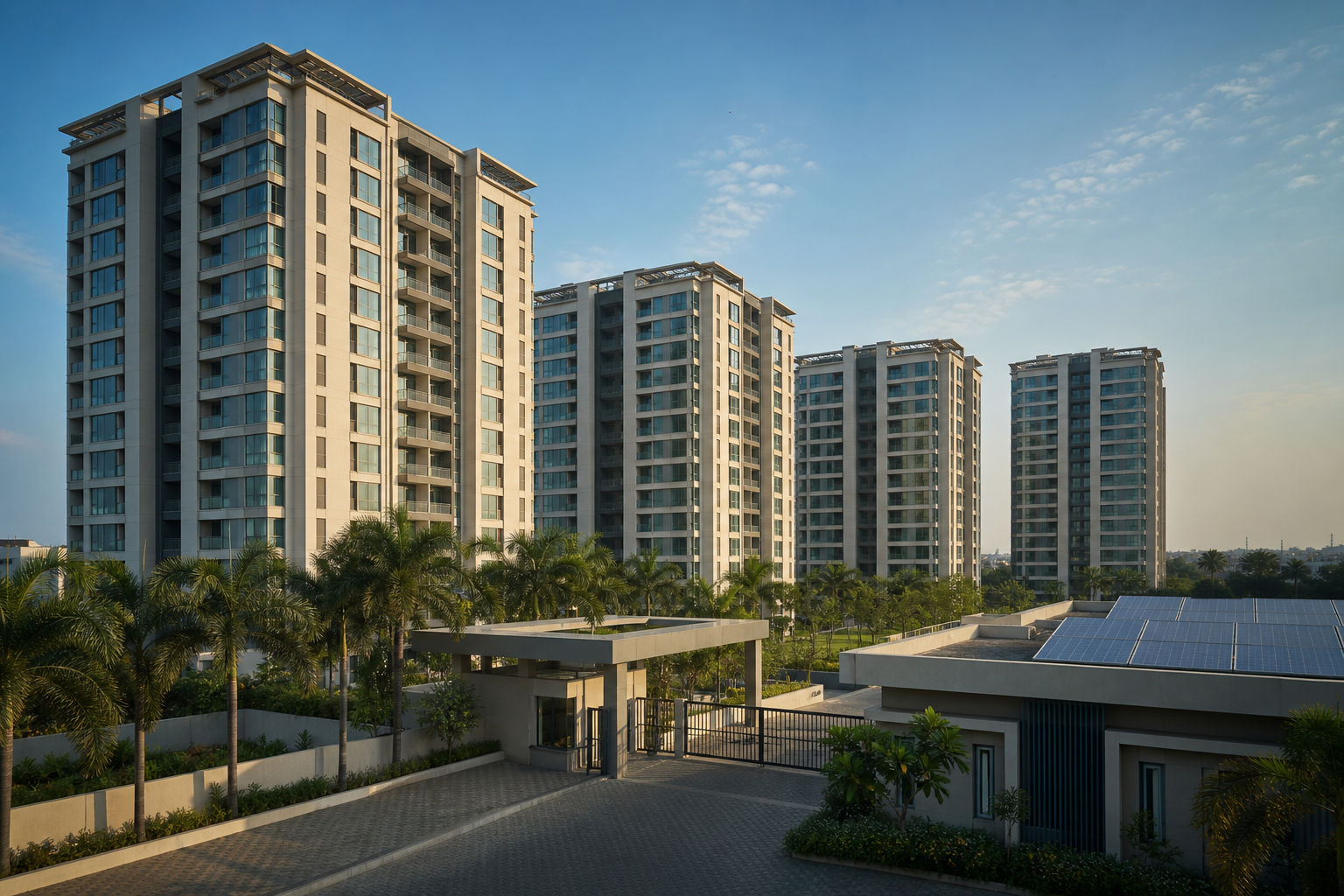
Higher common EB, higher maintenance. That is the chain.
Your flat meter and the society meter are not the same thing.
- Your flat meter is lights, AC, geyser, fridge.
- The common meter is lifts, water pumps, sewage treatment, corridor and basement lights, gate, cameras, clubhouse.
When the common bill rises, the association recovers it through maintenance. A tariff hike does not stay in the electrical room. It shows up as “why is maintenance up again?” in the residents’ WhatsApp group.
Two honest statements can both be true:
1. The government raised rates.
2. The campus may still be wasting money *on top of* that hike.
If you only argue (1), the group goes quiet. If you bring (2) with specifics — not blame — you look like the person who read the bill.
What you can still cut (even after the hike)
You cannot reverse TANGEDCO / TNPDCL rates. A resident *can* push the society to stop paying twice.
Leak 1 — the common bill is fatter than “units used.”
After a hike, every wasted unit costs more. Tamil Nadu also adds extra charges when the common service uses the grid inefficiently. On the paper that extra is often a TNEB / TANGEDCO power factor penalty or surcharge — sometimes folded into kVAh billing. You do not have to love the technical name. Ask: *“Besides the new rate, what extra lines are we paying?”* Part 2 opens a typical bill. TNERC is where the tariff orders live if someone wants the government part.
Leak 2 — machines you already bought keep dying.
A lift rehab is a major spend. STP blowers and water-pump motors are not cheap. If the same lift drive is replaced again, that cost also lands in maintenance. Residents feel downtime first — stuck lift, empty tank — and money second. That loop is the practical meaning of power quality in Chennai housing societies.
Power quality in Chennai housing societies is just a name for wasted maintenance
You do not need a lab. You need a lower common bill and lifts that stay in service. The rest of this article stays on those two things.
Are the lifts and motors failing more often?
This is what people actually notice. Not a formula.
Ask around the group — calmly, with dates if you have them:
- Does a lift trip or reboot in the morning office rush or the evening return, not at random?
- Has the same lift drive been replaced more than once in a couple of years?
- Do STP blowers or motors run hot, trip, or does the vendor always say “incoming supply problem”?
- Do water pumps trip when the lifts or the STP start?
- Does the electrician keep changing parts in the electrical-room panel on a never-ending AMC?
- Did complaints get *worse* after rooftop solar or LED corridor lights — the upgrades that were supposed to save money?
If two or three of those sound familiar, it is not only “the lift company is bad.” New lifts and STPs run on electronics. VFD elevators, STP blowers, LEDs and gate automation are why high THD (harmonic distortion) shows up in an apartment complex. Those electronics hate a messy common supply. You pay the OEM. You still pay the bill. Track the dates — that is the first check on power quality in Chennai housing societies.
Why solar and LEDs did not automatically shrink maintenance
Most campuses did something sensible: solar on the roof, LEDs in the corridors, a better STP, new lifts, a proper gate.
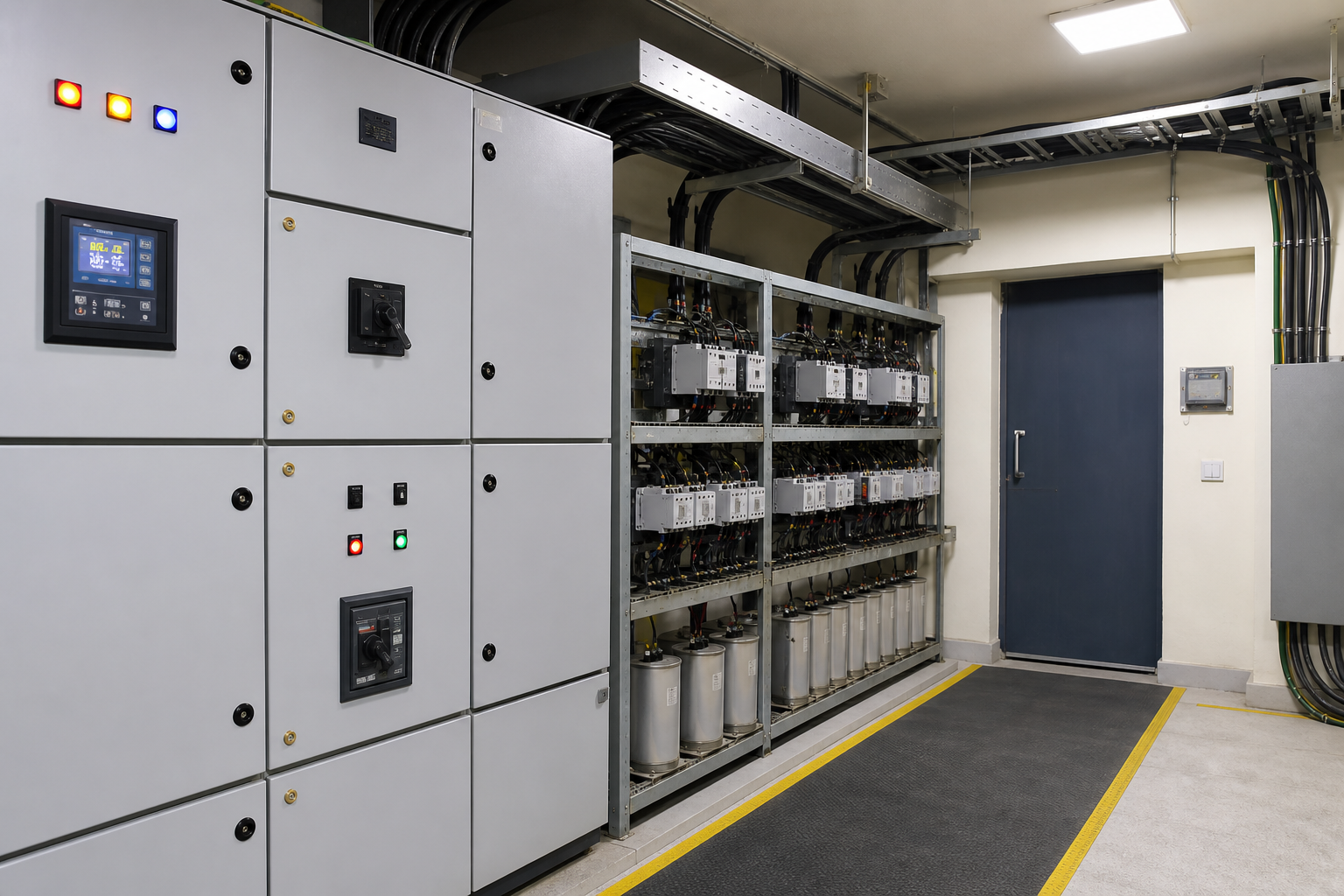
Those changes cut some units and added a lot of electronics. The electrical room at the gate often stayed in 2015. The old capacitor panel was built for a quieter campus — a couple of pumps, a couple of lifts, tube lights.
So maintenance can rise even when the committee “did the right things.” For many towers, power quality in Chennai housing societies got noisier *after* the green upgrades, not before.
- Solar means the society *buys* fewer units at noon. It does not automatically wipe extra charges or stop a lift drive from tripping.
- LEDs use less power. They are still electronics. Old panels and shaft cables can suffer.
- New lifts and STP blowers start and stop in seconds. A panel that wakes up in half a minute is always late.
The tariff hike made every one of those rupees louder. Power quality in Chennai housing societies feels different now because the rate *and* the building both changed.
Five questions that make you look prepared (not angry)
Copy these into WhatsApp. They are how residents actually push on power quality in Chennai housing societies — by asking, not lecturing. Forward to the secretary with “can we check these?” — not “you messed up.”
1. Of last year’s common EB vs this year’s, how much is the rate hike, and how much is extra units or extra charges?
If nobody can split it, that *is* the finding.
2. How many lift trips / drive replacements and STP motor or blower failures in 12 months?
A list beats “it happens sometimes.”
3. How often are we replacing the same parts in the electrical-room panel?
Healthy parts last 8–10 years. If they last months, the society is funding a loop.
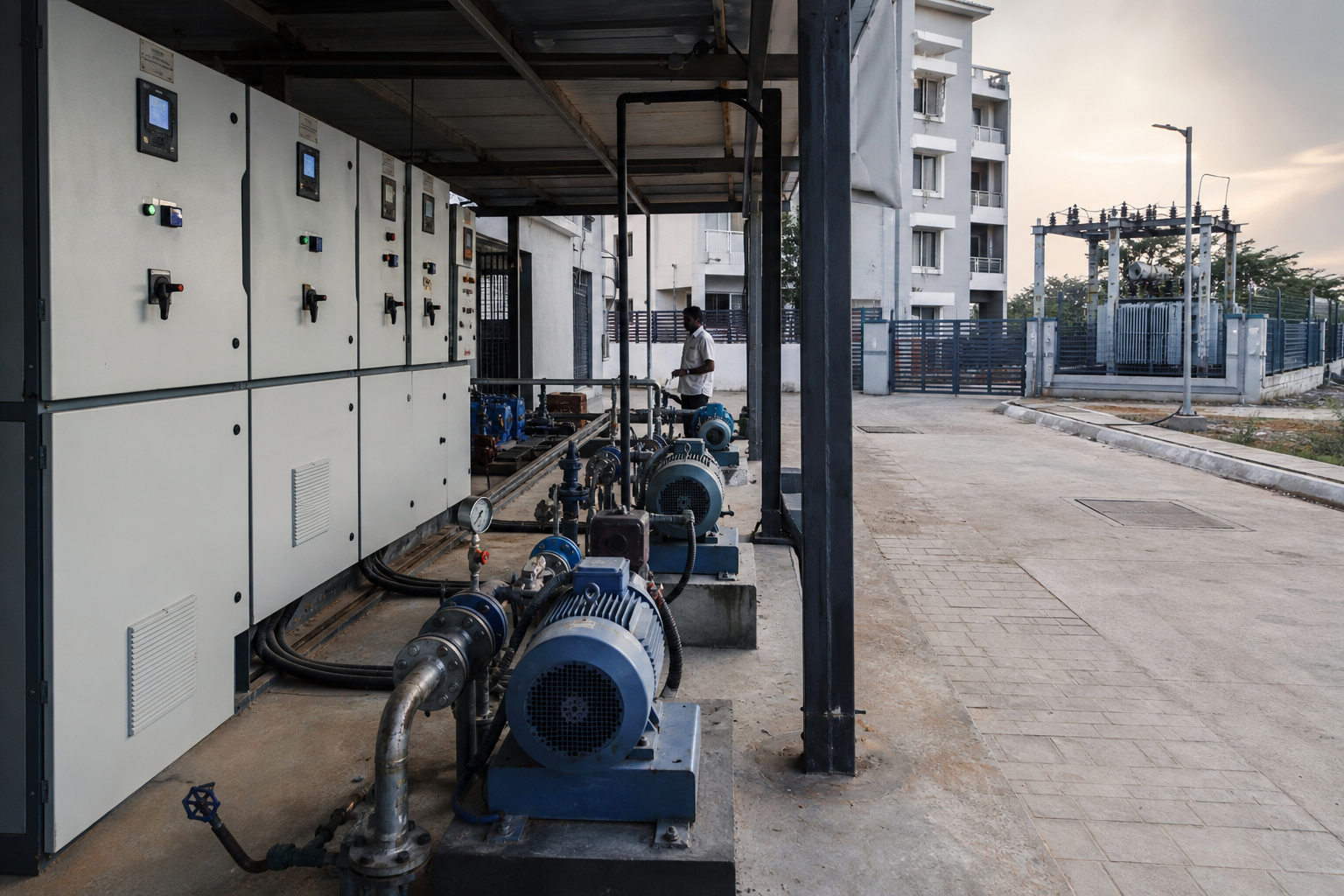
4. When the STP at the back trips, does the electrical room at the gate still “look fine”?
Voltage at the gate is not voltage 150 metres of cable later.
5. When did solar and LEDs go live — and did the common bill or the breakdowns jump in the same quarter?
Correlation is not guilt. It is a reason to look, not to buy another panel this week.
You now sound like a member who did homework. The secretary gets a checklist instead of a pile-on. That is how talk about power quality in Chennai housing societies should travel.
What “saving” actually means for a resident
Be straight with the group. Nobody is cancelling the government tariff.
What a society *can* aim for:
- Fewer extra charges on the common bill. On a large example we use in this series (360 flats, common load about 180 kW), that can be on the order of ₹47,000 a month on an illustrative ₹3.5 lakh bill. We unpack it in Part 2. That saving, if real, is maintenance you do not have to collect.
- Lifts and STP motors that last — one avoided drive replacement is a special levy you might never see.
- Lower transformer losses on the society’s own transformer — extra current is heat you already pay for.
- Stop paying AMC to swap the same electrical-room parts.
| What residents feel | A typical large Chennai campus (example, not a named site) |
|---|---|
| Size | 4 towers, 360 flats |
| Common load while lifts, water, STP run | about 180 kW |
| Rooftop solar | about 200 kWp |
| Extra current when the common supply is inefficient | about 17% more heat in the society’s own cables |
| Electrical-room parts if the supply is kind | 8–10 years |
| Same parts if the supply is messy | often 6–18 months |
| How fast a lift or STP blower changes | seconds |
| How fast the old panel usually reacts | 10–60 seconds — always late |
Screenshot the table if someone says this is vague. A first cut with *your* load is on the free Power Quality Solution Sizer. It is not a quotation. Use it when you want numbers, not guesses, on power quality in Chennai housing societies.

Please don’t let the next step be “buy a bigger panel”
After a hike, the instinct is a bigger capacitor panel — usually another APFC. That is a factory habit. An apartment campus is not a factory. Load jumps when someone calls a lift. It drops at noon if solar is strong. It jumps again at night. That is fluctuating load. A stepped bank is always late.
A panel that is too big over-corrects when the campus is quiet and still misses the lift rush. Harmonics from VFDs can also resonate with old cans. You pay for the box. Maintenance still hurts. The lift still trips. A bigger box is not a shortcut for power quality in Chennai housing societies.
A Static Var Generator (SVG) uses fast-response IGBT inverters for stepless / dynamic reactive power compensation in milliseconds, lead and lag. An active harmonic filter is a different tool, for distortion. SVG vs APFC for a housing society is Part 3 of this series — after the bills, not instead of them.
The first diagnostic is a power quality audit for residential apartments: three common bills, the lift/STP failure list, then a walk of the gate meter and the STP. A logger may record voltage sags and total harmonic distortion (THD). Hardware comes after that.
Later parts of this series stay in plain language. The first rule: bills + breakdown list + a walk to the STP — then buy.
If you are the secretary reading this (or just got it on WhatsApp)
You are not the villain. You are the person who can commission a proper look at power quality in Chennai housing societies — bills, a campus walk, and if needed a logger. That is the electrical safety and energy audit the common plant actually needs, not a photo of the panel.
Syncsine starts with the common bills and the lift/STP failure list, then walks the meter at the gate, a lift room, and the STP at the back. That *is* the power quality audit — bills and a campus walk, not a catalogue. We do not open with an SVG sizing slide. That is how we handle power quality from Chennai across South India. Equipment comes after the walk, if it is needed.
Residents: forward this with the five questions. Secretaries and RWAs: use the project enquiry form, write housing society or PQ audit Chennai, and attach a photo of the common bill if you can (hide account numbers). That photo beats a photo of the panel. If you want a site walk on power quality in Chennai housing societies, say so on the form.
Forward this. Then ask one thing.
Message you can copy:
> Sharing this — EB tariff did go up, so maintenance did too. Some of our common bill / lift-STP failures might still be cuttable. Can we get answers to the 5 questions before we buy another electrical panel?
Part 2 shows which lines on the common bill are the government, and which a society can still reduce: Extra lines on the common EB bill.
Power quality in Chennai housing societies is a dull phrase. The WhatsApp version is simpler: don’t pay the hike twice.
FAQ
Does power quality in Chennai housing societies raise my maintenance?
Yes, when the common bill rises — tariff plus extra charges plus machine replacements. Your flat meter is only your house. Lifts, water, STP and common lights ride a separate bill recovered through maintenance.
Did the government really raise EB?
Yes. Tamil Nadu revised tariffs. That is real. It does not explain every extra rupee or every dead lift motor. Both can be true. Power quality in Chennai housing societies is the “both” part.
I’m just a resident. What can I actually do?
Ask the five questions (or forward this). You are not accusing the committee. You are asking for a split: hike vs extra charges vs breakdowns. That is enough to start on power quality in Chennai housing societies.
Our lifts / STP keep failing. Is that the brand or the building?
Sometimes the machine. If the same drive or motor repeats, or it fails at the same busy hours, treat the common supply as a suspect. New lifts and STPs are electronics. They need a cleaner supply than old motors did.
Do I need to understand power factor?
No. You need to know whether maintenance is only the tariff, or also extra charges and replacements. The label can wait. The rupees cannot.
Why is traditional APFC failing in modern housing societies?
Because the common load is no longer a few pumps and tube lights. Lifts, STP VFDs, LEDs and solar change in seconds. A stepped capacitor panel is late, and harmonics can destroy the cans. A power quality audit tells you whether to retune, detune, or look at SVG.
How does a power quality audit reduce apartment common area bills?
It splits the tariff hike from extra TNEB / TANGEDCO lines and from repeated machine replacements. You stop buying the wrong box. The rupees you keep are maintenance.
Is a Static Var Generator better than capacitor banks for residential complexes?
Sometimes. Not as a WhatsApp purchase. Fast, distorted, solar-heavy campuses often need SVG or a hybrid. A steady, clean load can stay on a detuned APFC. Measure first. That comparison is Part 3.
Ready to talk through your site?
Share a few details about your loads and goals. A Syncsine engineer in Chennai replies within one business day — no obligation.